


SDK Integration & Usage Pattern
To work with effects programmatically, you define an Operator class, capture references to the target ModelObject using @SceneObjectProperty(), and manipulate their attached effects using the .effects facade.
Example Integration Pattern
Here is the standard structural pattern for accessing and configuring an effect inside an Operator's setup hook:
import {
    Operator, Context, AircadaContext,
    SceneObjectProperty, ModelObject, Setup, StickerEffect
} from "@aircada/spec";
import { SceneEffectIds, SceneObjects } from "../registry/scene.generated";

@Operator({
    name: "Example Operator",
    type: "EXAMPLE_OPERATOR"
})
export class ExampleOperator {
    @Context()
    air!: AircadaContext;

    /**
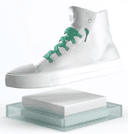
     * References to the shoe models in the scene.
     * This allows the operator to be attached to or reference these specific objects.
     */
    @SceneObjectProperty()
    shoeModel: ModelObject = SceneObjects.SHOE_RIGHT;

    @Setup()
    setup() {
        this.shoeModel.effects.get<StickerEffect>(SceneEffectIds.STICKER_1)!.proportionalScalar = .5;
    }
}
Referencing Scene Effect IDs
Effect IDs should never be hardcoded as raw magic strings. Instead, they must be referenced through the automatically generated scene.registry.ts (or scene.generated.ts) file, which guarantees that all referenced IDs match the active scene configuration:
export const SceneEffectIds = {
  // OrbitEffect
  ORBIT_1: "petyov5eijp",
  // AutoFrameEffect
  AUTO_FRAME_1: "cefvivlqbsr",
  // StickerEffect
  STICKER_1: "szk50nk6t1",
  // StickerEffect
  STICKER_2: "9obluztx7wo"
} as const;
Built-In Effect Types
All standard, built-in effect type definitions (such as StickerEffect, OrbitEffect, AutoFrameEffect, etc.) can be imported directly from the @aircada/spec package to provide complete IDE type safety, autocomplete support, and property validation inside your operators.